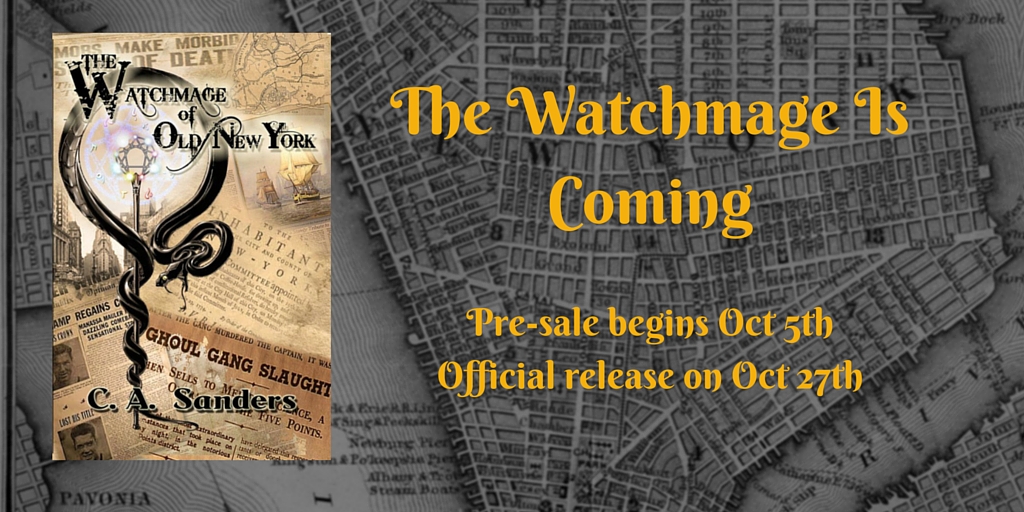
The Watchmage of Old New York is now live!!! It will remain 99 cents until tomorrow morning, so now’s the perfect time to buy it.
I’m super excited

Below are the buy links. Make it happen, people.


The Watchmage of Old New York is now live!!! It will remain 99 cents until tomorrow morning, so now’s the perfect time to buy it.
I’m super excited
Below are the buy links. Make it happen, people.
Goblins are common Veil Dwellers in New York, and they were early settlers in New Amsterdam. There was even one that sailed on the Half Moon with Henry Hudson. They are physically unappealing and their personalities are usually abrasive and sarcastic. They make up for these shortcomings with incredible intelligence and an aptitude for science and technology. Many of the world’s great scientists and inventors were Goblins.
Goblins adapt very well to the mundane world, where their penchant for invention is encouraged rather than stifled. Many prefer it to the other side of the Veil, where Glamour is the norm. Out of all the races, Goblins are the most comfortable in our world. They seem to take pleasure in watching the struggles of humanity.
Appearance

Goblins are 3 1/2 to 4 feet tall, with skinny bodies, oversized heads, and awkwardly large feet. They tend toward dull green skin, with large yellow eyes and ears similar in shape to a fox’s, but even larger (they take the idiom “I’m all ears” as a mortal insult). Their ears sometimes flop at the tips. Their hands and especially their fingers are long and agile.
Their illusionary guise–like most of the commoner Dwellers–are short. Unlike Gnomes, they are skinny, sometimes frail. They usually have larger ears and intense, bulging eyes. They wear utilitarian clothes and care little about fashion. Hygiene isn’t a priority in either form.
Society
Goblins prefer the company of no one. They like to live alone, and rarely make any interpersonal relationships. They are most at home when working on some project. Even when working on a project with other Goblins, they grumble, knowing that “they could do it better on their own.”
Goblins are easily slighted, but instead of physical confrontation, they plan elaborate tricks to humiliate or harm the offender. They do not get along well with Gnomes.
When Goblins do socialize, they enjoy the company of Trolls and Redcaps, the former for their wicked sense of humor, the latter for their gruff nature. They have little respect for the Sidhe and only pay homage when necessary.
Despite their isolationist nature, Goblins are very important to Dweller society on both sides of the Veil. Only Goblins know how to forge Hallowsteel, the enchanted metal that Dwellers use instead of iron and steel. Without Goblins, Dwellers would be stuck in the Bronze Age.
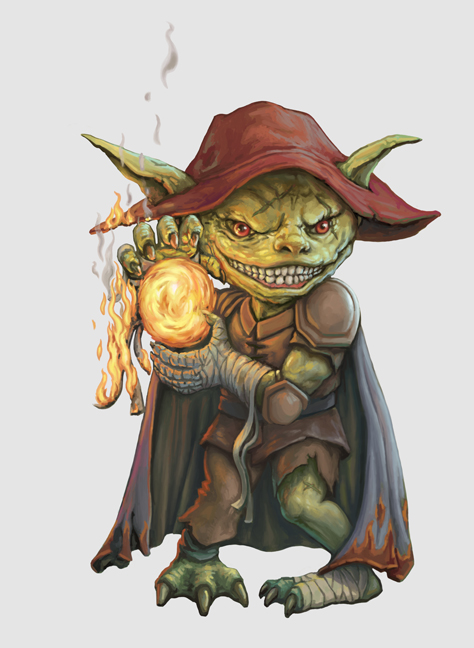
Goblin Names
Goblin names feature hard consonant sounds (like Redcaps) with Northern European inflections, and are never more than two syllables.
Abilities
Illusionary Guise–Like all Dwellers, Goblins can disguise themselves as human. Their appearance is as mentioned above.
Brilliance–Goblins are far more intelligent than other Dwellers and humans. They have exceptional aptitude with science and technology.
Hallowsteel–Only Goblins know how to forge Hallowsteel, the metal that Dwellers use instead of iron. Many have tried to take the secret, all have failed.
Object Summoning–Goblins can summon tools at will. Some can even create tools that don’t exist. This requires a small amount of Glamour for mundane tools, far more for fantastic ones.
Limited Apparation–Goblins can apparate (teleport) short distances, no more than a quarter mile. This requires a very large amount of Glamour, so they rarely use it.
Resistance to Injury–Like all Dwellers, they cannot be hurt by normal means. Only Magic, Glamour, attacks by other Dwellers, and extreme elements harm them. They are particularly resistant to fire, and have a particular attraction to it.
Susceptible to Iron and Salt–Like most Dwellers, pure iron causes grievous injury to them. Even being around iron causes discomfort. Alloys like steel does not have that effect. Salt causes them discomfort, and too much will burn.

Sign up to the mailing list now and get a FREE PDF of my short stories. The link will redirect you to the mailchimp site. Don’t worry, it’s safe.
I’m over the moon to announce that The Watchmage of Old New York is now available for preorder! Right now you can pick up the E-book for 99 cents. The paperback will come soon. I figured “one thing at a time.” The Official Release is October 27th, just in time for Halloween.
It’s been a long, strange trip for Watchmage. What started as a “brain refresher” short story after writing Song of Simon went on to be a serial, then exploded with popularity. Now it’s a series of novels (one so far) and possibly what i’ll be writing for the rest of my life (although I do intend on finishing up the sequels to Song of Simon).
Have I mentioned that I’m really excited?

I want to thank JukePop Serials for giving Watchmage a shot in the first place. I also want to thank everyone that supported it as a serial, and now as novels. You all rock.

I also have my mailing list set up, so that’s pretty cool too. I’m going to send out my first newsletter later this week. You can sign up for it here, and you get a FREE PDF of short stories (some of which take place in the Watchmage Universe, but I’m not saying which ones). I’m also going to include book deals from other writers, so you might find some new quality books on the cheap.
Watchmages are Wizards that have taken on a role of leadership in the magical world. Each Watchmage rules over a region or a large city, where they are responsible for the regulation, assistance, and justice for all supernormal elements in their jurisdiction.
Watchmages are either appointed by the Star of Nine–the Wizard’s ruling body–or ratified by them. They are expected to abide by the Star of Nine’s rigid laws, and any Watchmage that does not is punished harshly. There’s a saying that “there are no ex-Watchmages.” This is not exactly true, as Watchmages do resign (forever is a long time to hold a position), but Watchmages are not cast out for failure, they are executed.
There are some Watchmages that are not connected to any city or region. They wander the world, dispensing justice as they see fit (though within a Watchmage’s jurisdiction, they (usually) defer to the Watchmage. They are called Shadowmages, and they have much more leeway within The Star of Nine’s Law.
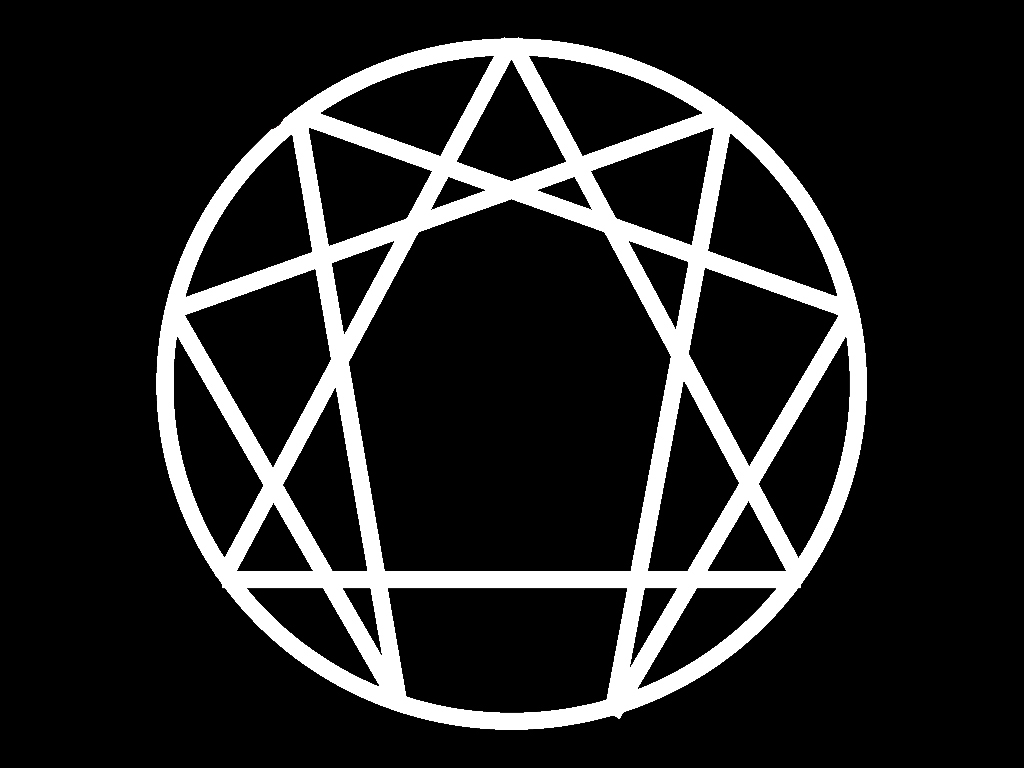
The Watchmage’s symbol is a cane or staff, usually tipped with a Fourth Way Enneagram within a circle. Some have a separate sigil as well.
The Star of Nine rules over the Watchmages. It makes the Laws that all supernormals must abide by, and has final judgment over all. Although all Wizards have a say in the Star of Nine’s doings, older wizards carry the most gravitas and have the most control.
Though The Star of Nine exists to keep the status quo, there are many factions within and political infighting. One might say that it’s the infighting that keeps the status quo.
The Star of Nine’s symbol is an Fourth Way Enneagram without a circle.
A Watchmage’s Duties: A Watchmage’s primary duty is to prevent Warp within their domain. This means keeping a close watch of the Magelings and Dwellers in an area, as an errant spell or visible Dweller can warp and tear the Veil.
Other duties include providing assistance and acting as judge to the supernormals in their domain, and defending the domain from hostile supernormals such as elemnetals, werewolves, vampires, and the undead. They also investigate rumors of new supernormals, usually the product of Warp or magic gone wrong.
While Watchmages have the right of judgment within their domain, they sometimes pass prosecution of major crimes to the Star of Nine.
History of The Watchmages: Watchmages have existed as long as Wizards, though their duties and the name was never defined until the Star of Nine formed. The Wizards acted as leaders and shamans in small tribes, and later on court magicians, kings, or even gods on Earth.
The misuse of magic by Wizards has led to great calamities in the past, such as destruction of whole civilizations. After the Crusades, the oldest Wizards formed the Star of Nine to govern themselves. Since then, there have been no major breaches in reality, though thousands of magelings and Dwellers have been “purged” from our side of reality.
The population surge and technical advances since the Renaissance have changed the nature of the position. Watchmages are often overwhelmed with growing populations, and new inventions, and a changing world that they find hard to understand. Like Dwellers, they are often lost in the new world, using laws and methods that no longer apply. Magelings have become both a greater threat and greater ally than ever before, for they understand the modern times.
The Star of Nine’s Duties: As mentioned above, The Star of Nine oversees all of the Watchmages and Shadowmages. They appoint Wizards to these positions, transfer them, and “remove” them when necessary. They make all of the Laws and hold trials for Magelings that commit grievous crimes (such as extreme Warp or creating new supernormals).
When necessary, they create new laws and weigh the virtues of new spells and curios, deciding whether to allow or outlaw them.
Although they’re banned from doing so by their own laws, The Star of Nine is very involved in mortal politics. Most of this puppeteering comes from the oldest Wizards whose power renders them free from the laws. Some have lived so long that they see humanity as nothing more than pieces on a chess board.
History of the Star of Nine: The Star of Nine formed after the Crusades in response to Wizards causing and using political upheaval for their own benefit. The original council consisted of nine members, but in 1653, under pressure from the Watchmages, they expanded it so that all Wizards have a say in the government. The original nine members still have the most power by way of influence and magical might. The downside of this equality is that The Star of Nine is incapable of taking swift action, at least with everyone’s knowledge. Instead, it created many clandestine actions and conspiracies within.
The Star of Nine has had trouble dealing with the modern world. The oldest members have the most difficulty. As such, The Star of Nine is approaching a tipping point where they must either adapt or implode.

Gnomes are one of the most common Veil Dwellers in New York. Along with Pooka and Goblins, they make up about 80% of New York’s Dweller population. They are the “salt-of-the-earth” types, the dream incarnate of the common person that works hard for their families and for the joy of a job well done. Their inherent abilities reflect this.
They prefer to live in woodland settings, and even their houses in cities reflect this with plants and small animals living within.
Friendly but reserved, Gnomes are generally good, practical, reliable citizens. Except for Goblins, Gnomes have adapted best to life in the mundane world, as long as they stay in rural settings. Of course, life on this side of the Veil can corrupt anyone.
Appearance: Gnomes are shorter than humans, averaging four feet tall. Then tend toward stout bodies. Ruddy cheeks and broad faces are common as well. Adult men favor beards, but women keep their faces clean shaven.
Gnomes prefer understated clothes, especially earth tones. Comfort and practicality trump fashion. Some Gnomes dress in the fashion of their homeland, but not if it will make them stand out.

Society: Gnomes are very family oriented. They marry early and tend toward large families. Like other Dwellers, they form clans that can consist of any Dweller race. They get along especially well with Pooka, and Gnome/Pooka marriages are common. There’s still stigma attached to this, as Gnomish parents push their children to marry of their own kind. Marriages with any other Dweller races is scandalish. Marriage with humans is looked down upon, but accepted as a fact of life in the mundane world.
Gnomes are distrustful of the larger races such as Ogres and Trolls. They have a fierce rivalry with Goblins that sometimes turns violent.
Gnomes are usually religious, following the traditional Dweller beliefs and attending church dutifully. Of all the races, Gnomes are the most likely to become priests.
Gnomish Names: Gnomish names tend toward the lyrical, like the Sidhe. They are usually two to four syllables, with the emphasis on the first syllable ie: GEE-bee, TEE-pa-tok, etc. Female names usually end in a vowel sound, and male names rarely do.
Abilities:
Illusionary Guise–Like all Dwellers, Gnomes can disguise themselves as human. Their guise is usually of a short, stocky person, a larger version of themselves.
Knack–Gnomes are born with extraordinary talent in one field. Common ones include farming, tradework (tailor, shoemaker, haberdasher, silversmith, etc), organization skills, writing, and cooking.
All Gnomes have some skill with plants and animals, which is why they get along well with Pooka.
Object Summoning–Gnomes can summon objects at will, but only those related to their knack or that will help them achieve a goal related to their job. This requires a small amount of Glamour.
Limited Apparation–Gnomes can apparate (teleport) short distances, no more than a quarter mile. This requires a very large amount of Glamour, so they rarely use it. If related to their knack, it becomes much easier (for example, Geebee often apparates around Turtle House when called).
Resistance to Injury–Like all Dwellers, they cannot be hurt by normal means. Only Magic, Glamour, attacks by other Dwellers, and extreme elements harm them.
Susceptible to Iron and Salt–Like most Dwellers, pure iron causes grievous injury to them. Even being around iron causes discomfort. Alloys like steel does not have that effect. Salt causes them discomfort, and too much will burn. If their knack involves salt (like in cooking) it causes less irritation.
There are two types of magic users in The Watchmage Chronicles. The first are Wizards: immortal beings with the power to channel Chaos Energy. The second are Magelings: Humans that have learned magic through apprenticeship and study. Though Wizards are far more powerful, there are few in the world. Magelings are plentiful, and their spells make up the bulk of magic in the world.
Wizards: Wizards have existed since pre-civilization, and were often the leaders of great civilizations or gods that they worshipped. Legends of great lost empires and divine acts are often the blurred retelling of their great feats. Though few in number, their kind have shaped the world and human existence, unseen and unknown. They are the invisible hand that pushes society forward and pulls it back.
Even Wizards don’t know if they are human or some other species, though they debate it at length. They appear to be exactly like a normal human, but with one difference. Within them is a Chaos Seed: a connection to the Dream World that produces Chaos Energy. Wizards use this energy to transform reality. They weave the same spells that Magelings do, but Chaos energy gives them more pronounced results.
Wizards are usually reclusive and avoid the company of short-lived humans. The exception are Watchmages. Watchmages are Wizards appointed by their ruling body–The Star of Nine–to oversee populated areas and keep Magelings and Dwellers from causing mishaps and Warp. Some Watchmages live in large cities, while other–more rare–Watchmages roam over a larger area, distributing justice as needed.
As long as a Wizard’s Chaos Seed exists, he cannot die. If his Seed is completely drained or somehow removed (though this has never been recorded), the Wizard will die.
Magelings: Magelings (they call themselves by many names: mages, magicians, sometimes even wizards) are human beings with nothing special besides the intellect and will to weave spells. They learn magic through apprenticeship to established Magelings and from years of study and practice. Like Wizards, they weave spells using the five elements, but lacking Chaos Energy. While they lack the potency of a Wizard, magelings can prove quite powerful. A Mageling armed with relics to enhance their spells can match a true Wizard.
Magelings have a very close-knit society, hiding themselves within fraternal and religious orders. They sometimes try to manipulate society like Wizards, but are less successful than they believe. Family lines play an important part of Mageling society. They often pass their secrets down from parent to child or other relatives.
Magelings are under the thumb of Wizards, and must be careful not to break their laws with reckless spells, as Watchmage justice is swift and…unpleasant. Sometimes a Wizard will take a mageling student in order to properly teach him magic and instill the law of The Star of Nine. Learning from a Wizard is considered a point of honor among Magelings.
Return to the Watchmage Wikipedia

In The Watchmage Chronicles, all matter in the mundane world is made of the five elements: Earth, Air, Fire, Water, and Aether (Note: although there is no knowledge of atoms or anything like that, these combinations go down to subatomic levels…work with me here). Wizards and Magelings learn how to manipulate the five elements to transform reality, with varying degrees of success. Among Dwellers, only Sidhe are able to manipulate the Five Elements. Wizards combine the elements with their Chaos Seeds for more powerful effects.
Elemental energy is within everything, even human beings. A Wizard or Mageling learns to tap the elemental energy inside of him, but this is limited. They can also draw energy from other places, such as crystals, herbs, fire, water, and premade curios and relics. Although Wizards can use these as well, their Chaos Seed makes it unnecessary.
The Elements and Their Uses
Most simple spells are performed with only one or two elements, but complex spells can involve all five. Depending on the spell pattern, different energies can be used for similar effects. In addition, talented and accomplished Wizards and Magelings can weave spells using elements outside what one would expect, making that spell harder to unweave. Elements are the threads, but the spell pattern creates the final product.
Earth: Besides the obvious like ground and stone, Earth energy is used in spells involving plants, animals (including humans), and physical attributes such as strength and durability. It’s often combined with Water and Aether for healing effects, though extreme healing requires all five elements and considerable power.
Air: Air energy is used for transport spells such as flight and appration, as well as weather control (along with Water) and sound. It can be a powerful offensive and defensive weapon when combined with other elements, creating bolts of force, telekinesis, speed, and even electrical effects.
Water: Water energy is used for weather (along with Air) and ice and steam effects. Because Water is the source of life and is everywhere, it can be very potent. Water Energy is important in healing spells, and its inverse (anything that heals can also kill). There are legends about Wizards that can pull the Water right out of a person’s body, drying them up like the desert.
Fire: Fire energy is used in the most obvious offensive spells. Fire spells are often difficult to control, because fire itself is so chaotic. If used correctly, fire is a vital tool, what set us apart from cavemen. Fire, along with Earth, can be used to increase vitality, as in “inner fire.” Fire spells are discouraged in heavily populated areas, for obvious reasons.
Aether: Aether is the most difficult of elements to understand, as it cannot be perceived. Aether represents the mind and soul, but also the cosmos. Aether is beyond most people’s understanding, and it is very difficult for a mageling to use (though Hendricks proved able to use it in The Watchmage of Old New York). Aether is used in telepathic and emotional effects, illusions, and offensive spells that involve movement, such as force and telekinesis (when combined with Air). It is the most important element in healing spells, which is why powerful healing spells are beyond the scope of almost all magelings.
Return to the Watchmage Wikipedia
The Chaos Seed is what sets Wizards apart from ordinary human beings. It allows them
to summon and use Chaos energy to power their spells. Since Magic is transformation, Chaos is extremely powerful. The Chaos Seed also provides immortality to Wizards, but if the seed is drained completely, the Wizard dies.
What is it? : No one knows exactly what the Chaos Seed is, but Wizard scholars believe it to be a connection to the Dream World. They believe that the “seed” is actually a pipeline of sorts that transfers Chaos to the Wizard. The phrase “dreams to reality” is often associated with this belief.
More religious Wizards believe it to be part of the Divine. They tend to see themselves as avatars of whatever God they believe in, and act according (for good or ill).
The Chaos Seed manifests around puberty, though it’s been know to do so earlier or much later in life.
How Does It Work? : Wizards imagine the Chaos Seed as a flower. It “blooms” when the Wizard channels energy, and “withers” as that energy is drained. In reality, it functions more like a well. When a wizard uses too much Chaos, he begins to age. When it’s replenished, he returns to his normal form. If it’s completely tapped dry, the Wizard will die. This has rarely happened, as the Wizard will usually fall unconscious from exertion beforehand.
Chaos Energy does not have to be used with the five elements in a set spell. Instead, the Wizard can use it directly to strike a target. This is particularly effective against Veil Dwellers. The influx of Chaos overwhelms them and can fade them back across the Veil.
Can You Lose or Acquire One? : There are rumors of the sort, but no official records. You can be sure that if it was possible, The Star of Nine (the Wizards’ ruling body) would keep it a secret. Chaos Energy can be stored in a receptacle, and is often used in magical relics. Such items do not replenish on their own, but must be done by a Wizard.
In “The Watchmage of Old New York,” Nathaniel made a pendant filled with Chaos for his apprentice, the mageling Hendricks.
Magic is at once very simple and incredibly complicated. There are several types of magic users, and each has different effects:
Magelings: Magelings (they call themselves magicians, wizards, mages, or whatever is en vogue at the moment), can create minor reality transformations. They do this by “weaving” together the five elements (Air, Water, Earth, Fire, and Aether) into set patterns, producing the desired effect. As the human body can only produce a small amount of elemental energy, they often draw energy from other places such as crystals, herbs, and magical relics.
Wizards: Wizards–such as Nathaniel–are set apart by the Chaos Seed. This “seed” is actually a part of the Dream World, and it allows them to use Chaos energy. When combined with traditional spells, they are able to transform reality far beyond a mageling’s scope.
Wizard are immortal as long as their Chaos Seed isn’t completely drained. The Chaos Seed refreshes over time. As a wizard ages, his Chaos Seed grows more potent. This means that older Wizards–such as Nathaniel’s master, Sol–control immense power.
Dwellers: Veil Dwellers (they call themselves Shining Ones), are creatures of the Dream World that have either left their home or were pulled into the mundane world through Warp (rifts in the Veil caused by misuse of magic).
Dwellers–except for the Sidhe–cannot use magic (and even the Sidhe cannot match a Wizard). Instead they use Glamour, which can produce effects. Each Dweller race has unique Glamour abilities, though some abilities (such as their illusionary guise) are universal. Some abilities include: Apparation, Flight, Illusion, Animal Form and Control, Item Summoning, and Physical Prowess.
Dwellers are immortal, but they can be faded across the Veil, back into the Dream World. They usually return to the Realm of their origin, but this is not definite.
 casandersdotnet